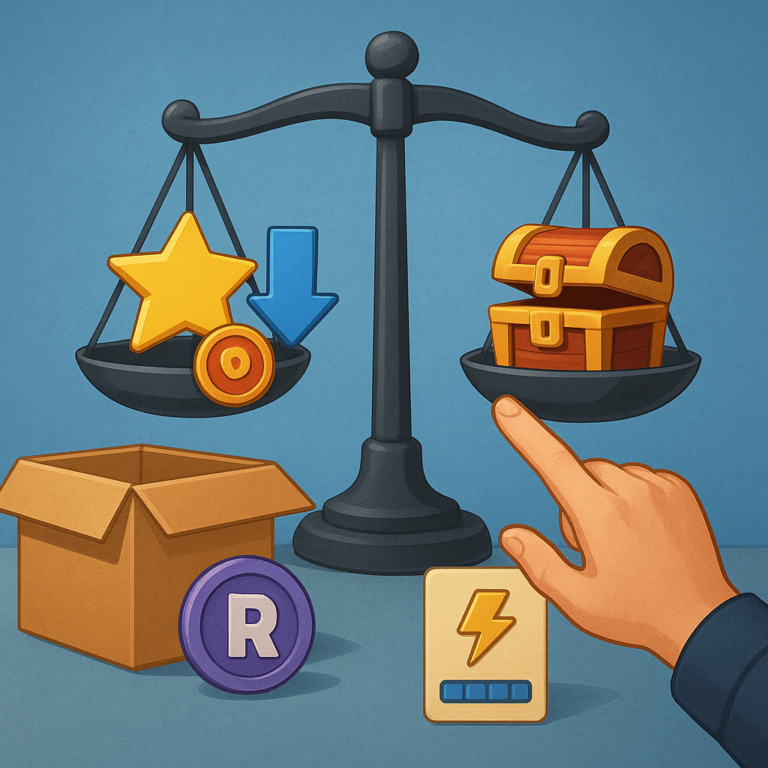
Roblox reward milestones can make ordinary play feel like a clear journey, but visible progress does not guarantee worthwhile value. A badge, chest, streak bonus, or level unlock may be enjoyable, useful, or mostly decorative. Before committing, compare what the milestone offers with the time, repetition, attention, and Robux it requires.
The best choice is rarely the reward that looks brightest or arrives soonest. It is the milestone that fits your actual goals and gives enough enjoyment or progress to justify its cost. Use a simple review before starting: identify the purpose, estimate the effort, check how long benefits last, and compare alternatives.
Identify the milestone’s real purpose
First ask what the milestone is designed to do within the game. A meaningful unlock may open a feature, support a build, improve convenience, or provide a cosmetic item you genuinely want. A weak milestone may simply extend a login routine. The difference matters because participation alone is not proof of value.
Look for a connection between the reward and the way you enjoy playing. If completing the milestone improves access, adds a satisfying objective, or grants an appearance you will use, it has a clear purpose. If the reward feels disconnected from your interests, treat it as optional rather than letting the game define your priorities.
Measure effort against payoff
Estimate the complete effort instead of focusing only on the final requirement. Count the likely sessions, repeated tasks, waiting periods, travel, failed attempts, and attention needed to stay engaged. A milestone that sounds easy may become demanding when several small obligations stack together. Your estimate should reflect normal play, not an optimistic best case.
Calculate the time budget
Turn that estimate into a rough time budget before you begin. For example, decide whether the expected hours fit comfortably around school, work, rest, and other games. If the milestone requires daily attention, include the cost of missed days or interrupted routines. A reward loses appeal when pursuing it creates more stress than enjoyment.
Check whether value lasts
Separate lasting benefits from temporary excitement. A permanent feature, dependable convenience, or cosmetic item you will keep using usually deserves more consideration than a boost that disappears after a short period. Temporary rewards are not automatically poor choices, but their limited window should be part of the calculation. Ask what remains after the celebration ends.
Consider how often you will use the reward and whether it changes choices. A useful upgrade can save time repeatedly, while a rarely seen cosmetic may matter only if you value its appearance. Streak bonuses also deserve caution: missing one day can erase momentum, and the emotional pressure may be greater than the practical benefit.
Compare competing uses
Even a worthwhile milestone may not be your best option. Compare it with another quest, a different upgrade, time spent learning the game, or a relaxed session without a checklist. The comparison does not need perfect numbers. You only need to identify which choice offers more enjoyment, progress, usefulness, or flexibility for the same investment.
Robux deserves comparison with time. Before buying a pass, boost, or item to accelerate a track, ask what it changes and how long that change matters. Separate a purchase that supports your goals from one that merely rescues progress you no longer enjoy. Spending more does not turn a weak milestone into a worthwhile one.
Review opportunity cost
Opportunity cost is the benefit you give up by choosing one path. Chasing a milestone might mean skipping a more rewarding activity, delaying a permanent purchase, or using attention on repetitive work. Write down the best alternative and compare it honestly. This small pause protects you from mistaking progress already made for value still available.
Spot unnecessary pressure
Pressure changes the decision because it makes an ordinary reward feel urgent. Watch for countdowns, streak warnings, exclusive language, or reminders that imply you are falling behind. These signals may be harmless presentation, yet they can also encourage spending or daily play beyond your comfort. Notice the feeling before deciding whether the reward deserves action.
Fair design should leave room for choice, not make you fear losing by waiting. A event can be enjoyable when its schedule is clear and its reward is optional. It becomes more concerning when missing a window forces catch up spending or exhausting repetition. You can appreciate an opportunity without treating it as an obligation.
Make the final decision
After reviewing purpose, effort, duration, alternatives, and pressure, choose the option that matches your priorities. Chase the milestone when the process is enjoyable and the reward remains useful. Skip or postpone it when the track demands too much, offers little lasting value, or depends on anxiety. A deliberate no is a successful decision.
Use this method when a new reward track appears, then revise your judgment as requirements become clearer. Roblox is rewarding when milestones serve your goals instead of controlling your schedule. Value the experience, protect your time and Robux, and let bad bargains pass without regret. Progress matters most when it supports play you want.