A safe Robux budget lets you enjoy Roblox without letting one exciting purchase control your balance. The goal is not to remove fun or reject every cosmetic, gamepass, or premium feature. Give each purchase a purpose, set a clear limit, and leave room for choices you may value. This approach turns impulse spending into play.
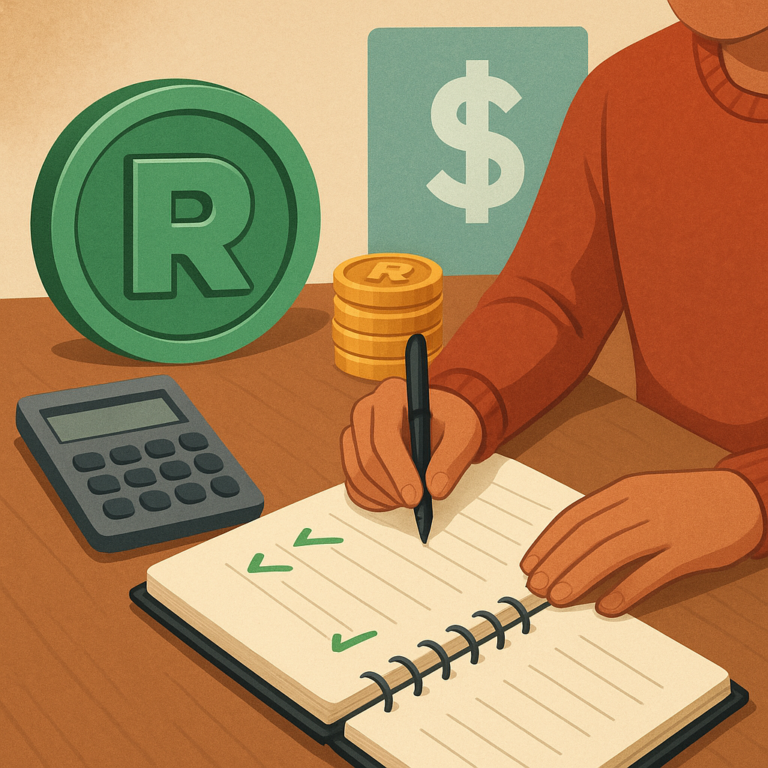
Before you open a shop page, decide what you want your Robux to accomplish. You might value faster progress in a favorite experience, avatar style, or access to a feature that improves frequent sessions. Writing that purpose in a note creates a pause between curiosity and payment. That pause helps you compare options calmly.
Start with a purpose for every purchase
Purpose is useful because purchases solve different problems. A gamepass may add convenience during repeated sessions, while a cosmetic item may express identity without changing gameplay. Neither choice is better; ask whether it matches reason for playing. If you cannot explain what an item adds, place it on a waiting list and revisit it later.
Separate needs, wants, and experiments
A useful budget labels each purchase before money leaves your balance. Needs support regular play, wants add enjoyment or style, and experiments test an unfamiliar feature. These labels are not judgments; a want can be worthwhile. They show which choices deserve priority when your balance is limited and prevent a craving from seeming urgent.
Label the purchase before browsing
Name the reason first: convenience, customization, access, or experimentation. Record the item and the experience where you expect to use it. This step turns a vague desire into a claim you can test. If the claim is simply everyone has it, put the purchase in wants rather than priorities.
Apply a brief waiting rule
For nonessential purchases, wait long enough to see whether desire survives the first excitement. The pause can last until your next budgeting check. During it, compare options and ask what you would give up. A waiting rule does not ban spontaneous fun; it keeps spontaneity from becoming your default.
Set a spending limit before you browse
Set a spending ceiling before opening a shop or game page. It should reflect what you can use for Roblox while leaving priorities untouched. Treat it as a boundary, not a suggestion that disappears when a limited offer appears. If you receive Robux at different times, choose whether the limit applies weekly or monthly.
Divide the ceiling only if portions help you think clearly. Reserve some for gamepasses, some for avatar items, and a little for experiments. Keep categories simple. The total limit matters most; portions merely stop one purchase type from consuming everything. When one portion runs out, wait instead of borrowing without a reason.
Judge value by usage, not hype
Popularity can make an item feel urgent, but attention is not value. Before buying, estimate how often you will use the feature or item. Consider whether it improves sessions or only one moment. A purchase used repeatedly can justify its price better than one noticed once. Judge cosmetics by enjoyment, not someone else’s enthusiasm.
Hype often relies on scarcity, praise, or promises of improvement. Those signals entertain, but they do not show how a purchase fits your routine. Ask whether the offer would interest you without a countdown or popular creator mentioning it. Read the description and compare the cost with alternatives. Calm research protects your budget from pressure.
Review your spending pattern regularly
A budget becomes useful when you inspect its results. Each week or month, list what you bought and ask whether each item improved your experience. Notice which purchases you use often, which you forget, and which remain worthwhile after excitement fades. This review is not about guilt; it gives evidence for better limits and choices.
Use your history to identify triggers, not just totals. You may discover that browsing after frustration leads to quick purchases, or that social pressure outweighs genuine interest. When you recognize a trigger, choose a response in advance: leave the page, wait, or check your balance. Responses are easier to repeat and can protect your enjoyment.
Keep enough balance for opportunities that matter
A full balance is not a problem, and spending every Robux is not a goal. Keep a reserve for features that genuinely fit your interests later. Decide what portion remains untouched, then treat it as unavailable during browsing. A reserve reduces pressure because attractive options do not need immediate answers. Patience keeps future choices open.
A reserve helps when interests change quickly. You may find a new experience, a useful pass, or an event that fits plans. You cannot predict every opportunity, but you can preserve flexibility to evaluate one. When the reserve has purpose, leaving it alone feels like preparation rather than missing out. That mindset supports steadier choices.
Build a routine that is easy to repeat
The best budget is one you can follow without constant effort. Choose a regular review to examine your balance, recent purchases, and upcoming interests. Set the next limit before browsing again. If the routine takes a few minutes, you are more likely to keep it during busy weeks. Consistency matters more than complexity.
At each review, ask three questions: What did I buy, how often did I use it, and what would I change? Write answers so review stays useful instead of burdensome. Adjust limits when behavior provides a reason, but avoid changing the plan after temptation. A repeatable routine leaves room for planned purchases and surprises.