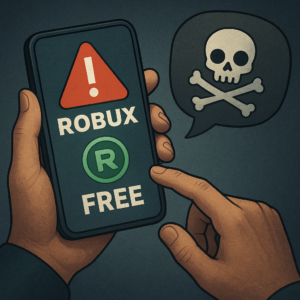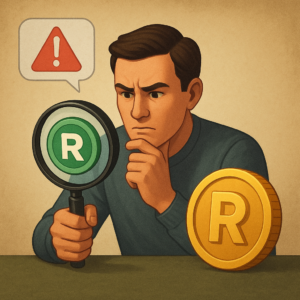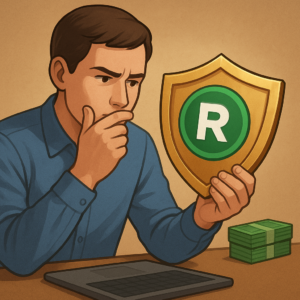

If you spend enough time around Roblox, you’ll notice a pattern: the same promise keeps coming back in different forms. Sometimes it’s a video claiming instant rewards. Sometimes it’s a website asking for a quick login. Sometimes it’s a message that sounds official but never explains where the Robux would actually come from. That is exactly why this topic matters. When players learn how to separate legitimate opportunities from vague promises, they protect their account, save time, and avoid a lot of frustration.
The safest way to think about Robux is simple: every real method has a source, a rule, and a purpose. If one of those pieces is missing, the offer deserves a closer look. In the sections below, we’ll break down the signs that help you spot safer options and the red flags that usually point to something unreliable. The goal is not to make things complicated. It is to give you a practical way to judge any offer before you click, sign in, or share information.
Start with the source, not the reward
The first question should never be “How much Robux can I get?” It should be “Where would this Robux come from?” That question changes everything. Real opportunities always have a visible origin, whether that’s a game pass sale, an item purchase, a creator payout, or a platform feature that clearly explains the flow of value. If the source is hidden, vague, or explained with marketing fluff instead of a real process, the offer is weak from the start.
This matters because scams often rely on excitement. They focus on the reward and skip the explanation. A safe approach does the opposite. It slows down and checks the mechanics first. If a method can’t explain how the Robux is generated, who benefits from the exchange, and what Roblox rule it depends on, then it is not something you should trust just because the page looks polished.
Look for methods that fit Roblox’s own logic
Legitimate paths usually fit the platform’s economy. They make sense inside the game environment, not outside it. That means they connect to something players already understand: items, experiences, upgrades, access, or creator tools. When a method feels disconnected from how Roblox works, that’s a warning sign. The more a promise depends on mystery, the more careful you should be.
A practical example is a game pass. Players know what they are buying, and the developer knows what value is being offered. That is a clear exchange. A fake offer, on the other hand, often asks for unrelated actions like completing surveys, installing random files, or sharing passwords. Those steps do not build value inside Roblox; they just create risk. A good rule is simple: if the method would still make sense if it were described in one sentence to a parent, it is probably easier to trust.
Check whether the process is transparent
Transparency is one of the best filters you can use. A safer Robux opportunity should explain what the user does, what the reward depends on, and what the limitations are. It does not need to promise instant results. In fact, honest methods often mention that growth takes time, effort, or consistency. That honesty is a good sign, not a bad one.
When an offer hides the process, it usually wants you to act before you think. The same is true when a page uses urgency to push you forward: “limited time,” “only today,” “secret method,” “exclusive reward.” Those phrases are designed to make you skip the important questions. Good opportunities do not need that pressure. They stand on their own. If the path is real, it should be easy to understand without guessing what happens after the click.
Pay attention to account and device safety
One of the fastest ways to judge an offer is to ask what it demands from you. If it asks for your password, recovery email, downloads, or access to sensitive data, pause immediately. A legitimate Robux path does not need you to hand over more information than necessary. The more personal the request becomes, the higher the risk usually is.
Device safety matters too. Suspicious files, browser extensions, and unofficial apps can create problems that go far beyond Robux. They may expose your login information, slow down your device, or bring in malware. That is why safe decision-making is not only about avoiding loss inside the game. It is also about protecting the phone, tablet, or computer you use to play. If an offer makes your security feel like a small detail, it is not a good offer.
Understand that real progress usually takes effort
Many players fall into bad offers because they hope the shortcut will be easier than the real path. But in most cases, the opposite is true: the reliable route is simply more honest about the work involved. If you are creating a game, improving engagement, or building an in-game economy, progress comes from testing, iteration, and consistency. That is less flashy than “instant Robux,” but it is far more believable.
This is especially important for younger players, who can easily confuse a confident tone with trustworthiness. A safe mindset helps here. Ask whether the offer teaches you something useful, whether it connects to actual Roblox systems, and whether it would still seem reasonable after you read it slowly. If the answer is no, it is probably just a promise dressed up to look helpful.
Choose opportunities that leave you better informed
The best Robux opportunities do more than promise a result. They help you understand the platform better. They show how value is created, how players respond, and why some games or items work while others do not. That kind of learning is a benefit on its own, because it makes you more careful and more capable next time you evaluate an offer.
In the end, spotting safe ways to earn Robux is really about learning how to think before you click. Look for a clear source, a transparent process, and a real connection to Roblox’s own logic. Avoid anything that asks for unnecessary access or depends on urgency to get your attention. Once you train yourself to check those basics, the empty promises become much easier to ignore — and the legitimate paths become much easier to recognize.