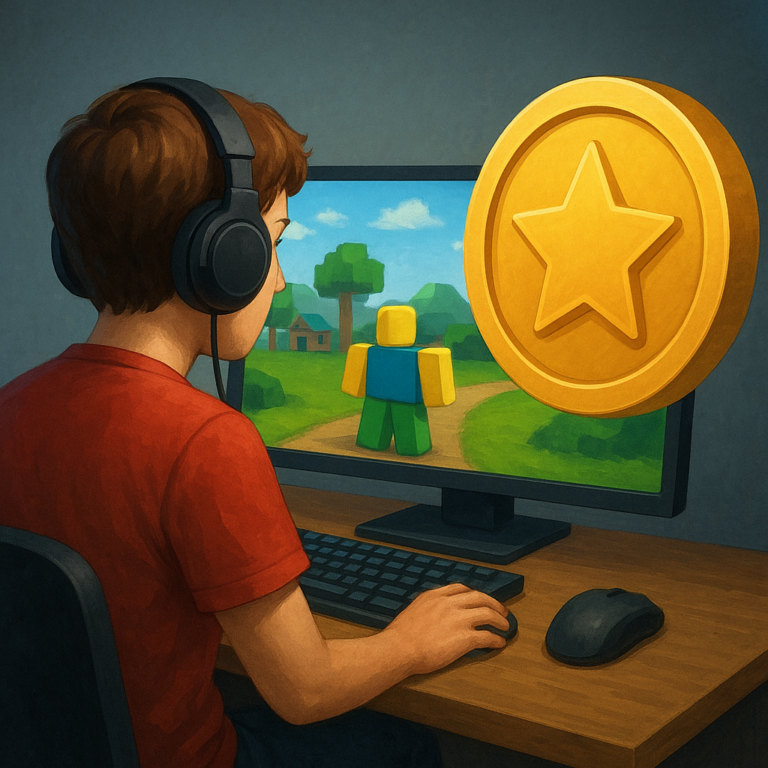
In Roblox, attention is never guaranteed. A player can join out of curiosity, look around for a few seconds, and leave just as quickly if the experience does not give them a reason to stay. That is why reward loops matter so much. They are the structure that turns a short visit into a meaningful session and, in many cases, into a reason to return later.
For creators, understanding reward loops is not just about making a game feel fun. It is also about building momentum, shaping player behavior, and creating a flow that supports progression naturally. When a game gives the player an action, a reward, and a next step that feels obvious, the whole experience becomes easier to enjoy. Below, we will look at how that structure works and how it can make a Roblox game stronger over time.
What a reward loop actually does
A reward loop connects action to payoff. The player does something, receives feedback, and gains motivation to continue. That can be as simple as collecting coins, opening a chest, unlocking a new area, or completing a short challenge that leads to a bigger goal. The important part is not the size of the reward, but the clarity of the loop.
When the player understands that effort leads to progress, the game becomes easier to read. Confusion drops, engagement rises, and the experience starts to feel more purposeful. In Roblox, that kind of clarity is valuable because players often decide very quickly whether a game is worth their time.
Why simple loops often work best
Many creators assume they need complex systems to keep players interested, but the opposite is often true. Simple loops are easier to understand and easier to repeat. If the player can tell within moments what to do and what they gain from doing it, the game already has an advantage.
A clear loop also creates space for improvement. Once the basic structure works, you can add new layers such as unlocks, upgrades, timed events, or cosmetic rewards. That progression gives the game room to grow without making the first minutes overwhelming.
How reward loops support retention
Retention is one of the biggest signs that a game is working. If players come back, it usually means the loop is strong enough to feel satisfying. A good loop makes the player think, “I want one more round,” or “I almost have enough for the next upgrade.” That feeling is powerful because it turns short-term actions into long-term interest.
In practical terms, this can come from small wins, visible progress bars, repeatable missions, or rewards that get closer together at the right pace. The goal is to keep the player moving without making the experience feel rushed or artificial.
Where monetization fits into the loop
Monetization works best when it feels like part of the experience rather than a barrier in front of it. If a game offers useful upgrades, cosmetic items, or convenience features at the right moment, players are more likely to see value in them. The key is to make sure the offer fits the current stage of the game.
For example, a player who is deeply invested in a progress system may be more open to a pass that speeds up growth or unlocks a bonus path. The same player will probably ignore an offer that arrives too early or feels disconnected from what they are trying to achieve.
How to test whether the loop is working
The easiest way to test a loop is to watch behavior. Do players stay long enough to understand the goal? Do they repeat the core action willingly? Do they reach the next reward point without confusion? These questions reveal more than assumptions ever could.
If people are leaving too quickly, the loop may be too slow or too unclear. If they are progressing but not returning, the rewards may not feel meaningful enough. Small adjustments to pacing, feedback, and reward timing can make a large difference.
In the end, reward loops are not a design detail. They are the backbone of many successful Roblox experiences. When the loop is clear, fair, and satisfying, players have a reason to keep going, and the game has a better chance to grow with them.