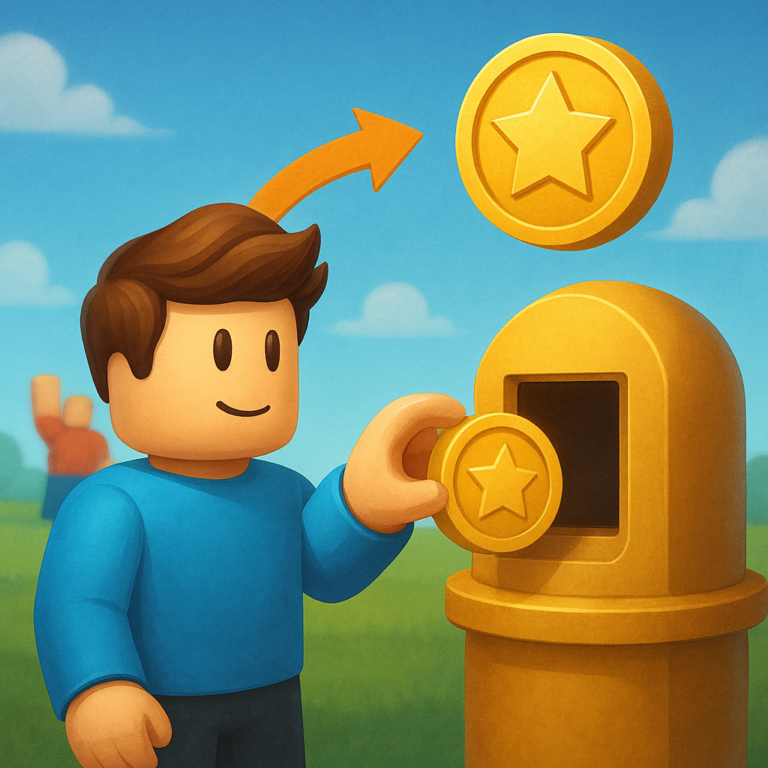
In Roblox, attention is hard to earn and even harder to keep. Players can join out of curiosity, explore for a minute, and leave if the experience does not give them a clear reason to stay. That is why reward loops matter so much. They are not just a design trend or a marketing trick; they are the structure that turns a short visit into a reason to return. When a game gives the player a simple action, a visible payoff, and a next step that feels natural, the experience starts to feel alive.
For creators, reward loops are especially important because they help connect fun with progression. A player who feels progress is more likely to continue, revisit, and interact with the game’s systems. The best part is that a reward loop does not need to be complex. In many cases, the strongest games are built on very clear actions and very clear rewards. Below, we will look at how to build that structure in a practical way, without turning the game into noise or making the player feel manipulated.
Start with one repeatable action
Every reward loop needs a starting point. The player should be able to do one thing, understand it quickly, and repeat it without confusion. That action might be collecting coins, completing a short mission, defeating a simple enemy, or reaching a checkpoint. The key is that it must feel easy to understand in the first moments of play. If the player has to spend too much time figuring out what to do, the loop breaks before it even begins.
A good repeatable action also needs room for rhythm. If the task is too slow, the reward feels distant. If it is too fast, the game can feel empty. The best loops usually balance clarity and momentum. The player does something, gets feedback right away, and feels encouraged to do it again. That repetition creates the base for everything else the game wants to offer.
Make the reward visible and immediate
A reward only works if the player notices it. In Roblox, that means the game should show progress clearly, whether through sound, visual effects, currency counters, level bars, or unlock animations. Immediate feedback helps players connect action with result. Without that connection, the reward becomes abstract and loses impact. Players are much more likely to continue when they can see that what they just did mattered.
Immediate feedback does not mean huge rewards every time. Small wins can be very effective when they feel consistent. A few coins, a new badge, or a progress bar moving forward can be enough to keep the loop alive. What matters is the sense that the game is responding to the player’s effort. That response is what keeps the experience from feeling flat.
Create a next goal before the current one ends
One of the biggest mistakes in game design is letting the player finish a task without knowing what comes next. A strong reward loop always points forward. Once the current objective is complete, the game should already suggest the next milestone. That can be a bigger item, a new area, a stronger ability, or a longer-term objective that gives the player a reason to keep pushing.
This is where progression becomes powerful. When the player understands that today’s effort leads to tomorrow’s advantage, the game gains structure. The reward is no longer just the result of one action; it becomes part of a larger path. This feeling of forward motion is what makes players come back, especially when each step feels achievable and meaningful.
Use pacing to keep the loop satisfying
Pacing determines whether a reward loop feels exciting or exhausting. If rewards arrive too slowly, the player may lose interest before the payoff. If they arrive too quickly, the experience can feel shallow and stop being interesting. Good pacing gives the player enough momentum to stay engaged while still making each reward feel earned.
That balance can be adjusted through the size of the reward, the difficulty of the task, and how many steps are needed before the next unlock. A healthy loop often starts small and becomes more demanding over time. This approach helps players feel growth without overwhelming them. It also gives the game a natural sense of progression that keeps the experience fresh.
Connect rewards to player motivation
Different players are motivated by different things. Some want cosmetic items, some want power, some want status, and some simply want a satisfying sense of progress. A smart reward loop takes that into account. When the reward matches what the player cares about, the loop becomes more effective because it feels personal. The game is not just giving points; it is giving something the player values.
This is why it helps to think beyond currency alone. Currency is useful, but it works best when it leads to something else: better tools, visual upgrades, access to new content, or a stronger role in the game world. The more clearly the reward connects to a real desire, the stronger the motivation to keep playing.
Keep the loop fair and easy to trust
A reward loop only works long term if players trust it. If the game feels like it is hiding progress, stretching tasks unnecessarily, or forcing players into awkward choices, the experience loses credibility. Players may stay for a while, but they will not return for long. Fairness matters because it helps the player feel that effort has value.
Trust also comes from consistency. If the same action sometimes gives a reward and sometimes does not, players begin to feel uncertain. Clear rules create confidence. When the player knows what to expect, the loop becomes easier to enjoy. That clarity is often what separates a forgettable game from one that people actually recommend to others.
In the end, a good reward loop is not about making players chase endless incentives. It is about giving them a rhythm that feels rewarding, understandable, and worth repeating. When the loop is well built, the game gains more than retention. It gains identity.